A safe place to live.
A community that understands. A plan for moving forward.
The AFoundation Path
Recovery begins after treatment.
Completing treatment is a major achievement. But the period immediately afterward can also be one of the most vulnerable times in recovery.
Women leaving treatment may face unstable housing, limited income, transportation challenges, fractured support systems, or living situations that place their sobriety at risk.
AFoundation is being created to help fill that gap.
We provide the bridge between treatment and independent living.
A safe place to continue your recovery
AFoundation is designed for women who have completed treatment and are ready to build the next stage of their lives in a supportive sober living environment.
Live in community.
Build healthy routines.
Find employment.
Strengthen financial independence.
Prepare for a home of your own.
Stability first. Independence is the goal
01 / STABILITY
A safe, substance-free home, healthy routines, connection, and time to regain footing.
02 / RESPONSIBILITY
Shared household responsibilities, accountability, recovery participation, and personal goals.
03 / INDEPENDENCE
Employment, education, transportation, budgeting, savings, and healthier decision-making.
04 / TRANSITION
A realistic plan for stable housing and continued connection to recovery resources.
Eight women at a time.
AFoundation's first residence is planned as a four-bedroom home serving up to eight adult women.
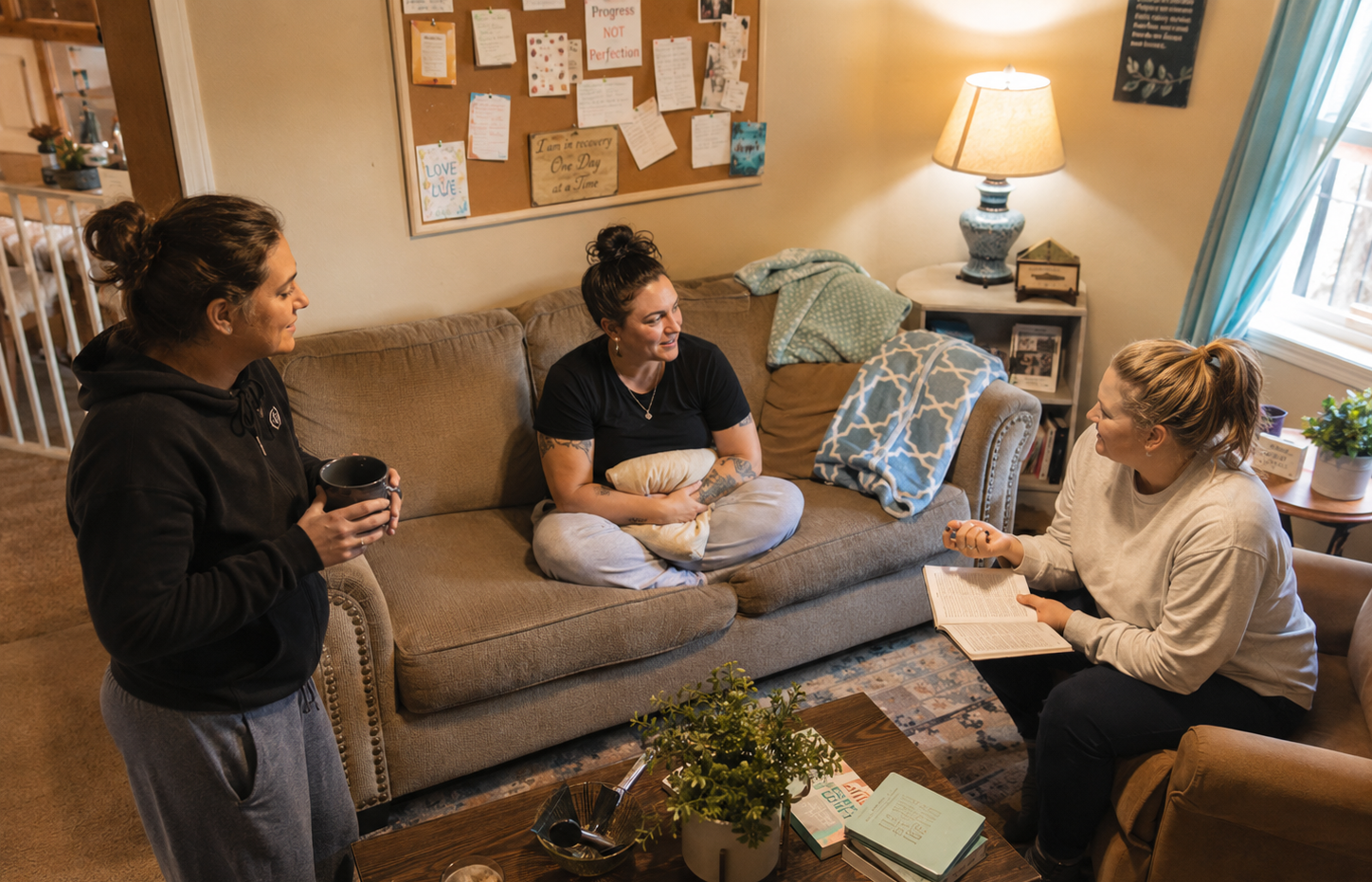
The home will provide shared bedrooms and comfortable common areas, along with the structure, accountability, and peer connection necessary to practice recovery in everyday life.
Recovery happens one day—and one step—at a time.
Living at AFoundation is about more than having a place to sleep.
It is an opportunity to rebuild the everyday parts of life that create long-term stability.
Residents may work toward:
Finding and maintaining employment; building healthy daily routines; learning to budget and save money; pursuing education or vocational training; obtaining a driver's license or GED when needed; strengthening recovery; and preparing for stable independent housing.
We live together. We grow individually.
Community is an important part of AFoundation.
Residents share household responsibilities, support one another, maintain healthy routines, and practice accountability in everyday life.
Everyone's recovery is her own—but no one has to do everything alone.
Home, not an institution
A place that feels like home.
Recovery happens in everyday life.
AFoundation is designed to feel welcoming, comfortable, and residential—not clinical or institutional.
Residents share space, maintain the home, prepare meals, follow routines, resolve everyday issues, support one another, and practice the same responsibilities they will carry into independent living.
Treatment begins recovery. A stable home can help sustain it.
For some women, leaving treatment means returning to an uncertain living situation.
AFoundation is not a replacement for treatment.
We are the next step.
Our home gives residents time, structure, connection, and accountability while they rebuild employment, finances, routines, relationships, and confidence.
What guides us.
RESPECT
We treat every resident with dignity while encouraging respect for herself, others, the home, and the recovery process.
RESPONSIBILITY
Recovery includes learning to follow through, contribute, meet commitments, and take ownership of personal goals.
SISTERHOOD
Healthy connection matters. Residents live alongside women working toward many of the same goals and challenges.
HEALTHY LIVING
Daily routines, physical well-being, healthy relationships, financial stability, and responsible decision-making all contribute to a stronger life in recovery.
The four guiding values—respect, responsibility, sisterhood, and healthy living—come directly from the program plan.
AFoundation is sober living.
AFoundation is not a treatment facility.
It is a safe, substance-free residential environment designed for women transitioning from treatment toward independent living.
Residents continue working on their personal recovery while taking increasing responsibility for employment, finances, transportation, daily life, and future housing.